

Apple
Services: Growth Marketing
A template library and an intake platform, both rebuilt so good output stopped depending on who made it.
The problem
The org ran on decks and a platform for tracking projects and campaigns. Both failed the same way.
Every team built its slides from a blank page, so deck quality tracked whoever was assigned to it.
And the platform’s intake tables asked people to retype what the system already held. Which is why a project’s real state usually lived in someone’s side spreadsheet.
Work that repeated every cycle was redone by hand every cycle. That’s a design problem before it’s a tooling one.
What I did
I built a template library, so a deck started from a structure instead of a blank page: fixed section order, a story spine, components for the parts every deck needs.
The goal was never consistency for its own sake. It was that a good deck stopped depending on who made it.
On the platform I worked the surfaces people touched most. Tables pre-populate what’s already knowable instead of asking for it. Fields people tracked on the side became real columns. Variant naming got a rule instead of a habit.
The calendar view now mirrors the list’s order, because two views that disagree teach people to trust neither.
Intake got a defined cycle, checkpoints, and a worked example of a strong submission, so reviewers compared against a standard rather than each other.
Outcome
Six months after I changed teams, requests to join the template library still route to me. Eight in 2026, three of them inside nine days.
That is the best evidence it stuck, and the clearest sign it now needs a second owner.
More work
All work ManagementEmployee resource group
Asian Pacific @ Apple
Three ways a chapter promotes its events, each rebuilt so it runs without depending on me.
 ProductDesign systems
LinkedIn
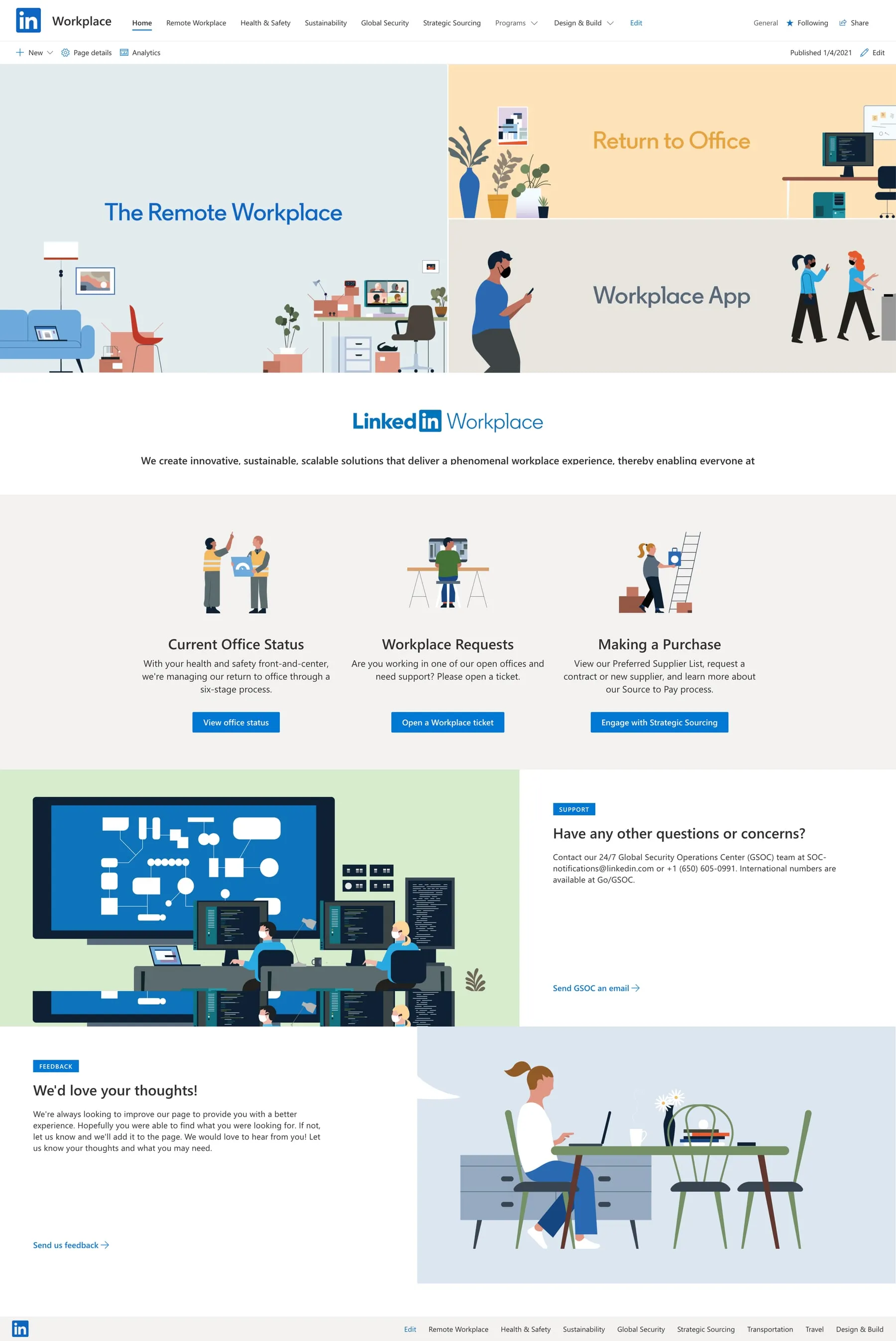
Internal tools for the Workplace team: a homepage rebuild, a template, and an accessible newsletter.
 ProductApple
Operations: Global Sourcing
An AI assistant designed so its output is trustworthy enough to act on without redoing the work yourself.