

Apple
Design: Prototype Library
A central library for my product team's prototypes, where each new one starts from a shell we keep current.
The problem
Prototypes lived wherever each of us built them: a local folder, a scratch file, a link in a thread nobody could find later.
So the same screen got rebuilt twice, and nobody could say what had already been tried.
What I did
I built one library the whole product team prototypes in. Every piece is a real page that runs in a browser at production fidelity.
Each product has a shell: its chrome, its tokens, its components. New prototypes start from it, not a blank page, so fidelity stops depending on who was free that week.
One script pulls the live app’s computed tokens and reports the drift, so a shell gets trued up rather than guessed at.
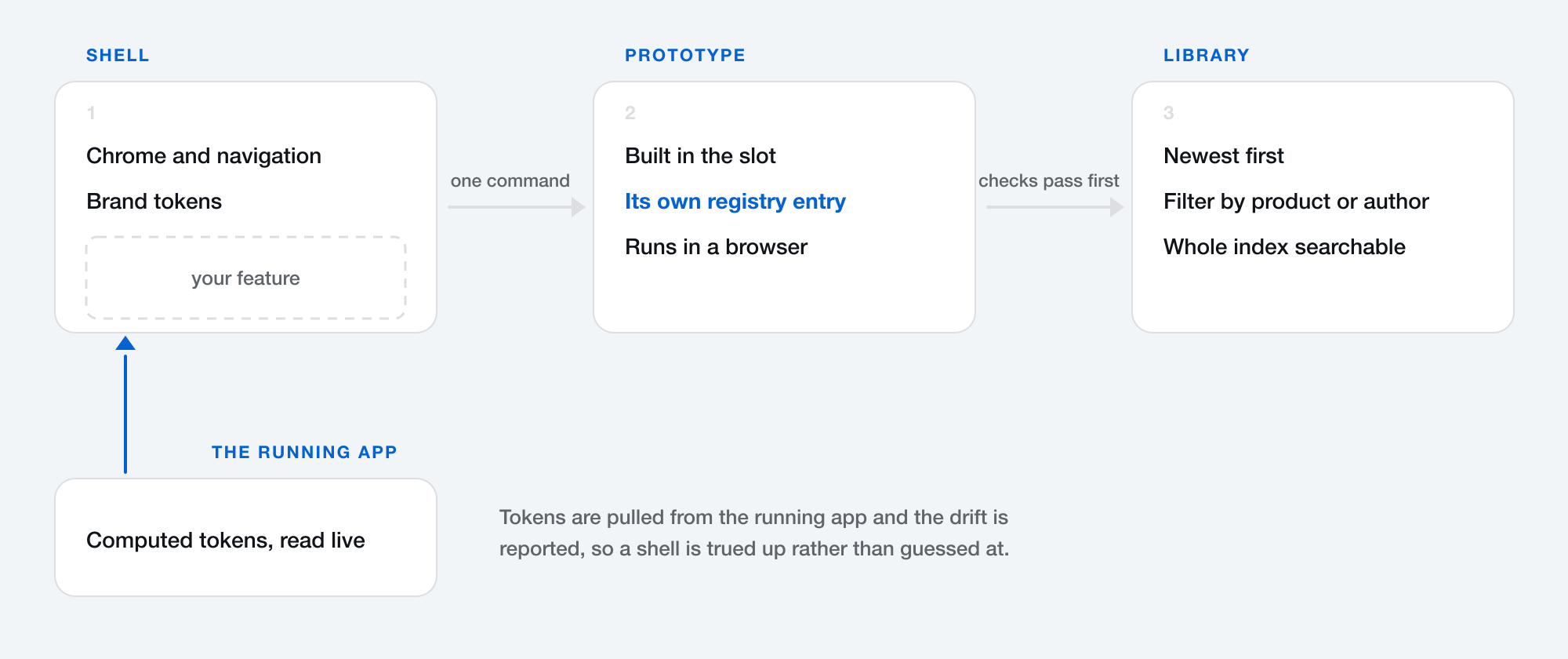
Every prototype owns its registry entry. The first version shared one file, and two people editing it from stale copies silently dropped each other’s work.
One command scaffolds a prototype, registers it, and adds it to the gallery. There is no CI here, so checks run locally before every push: nothing lands unnamed, unregistered, or too internal to share.
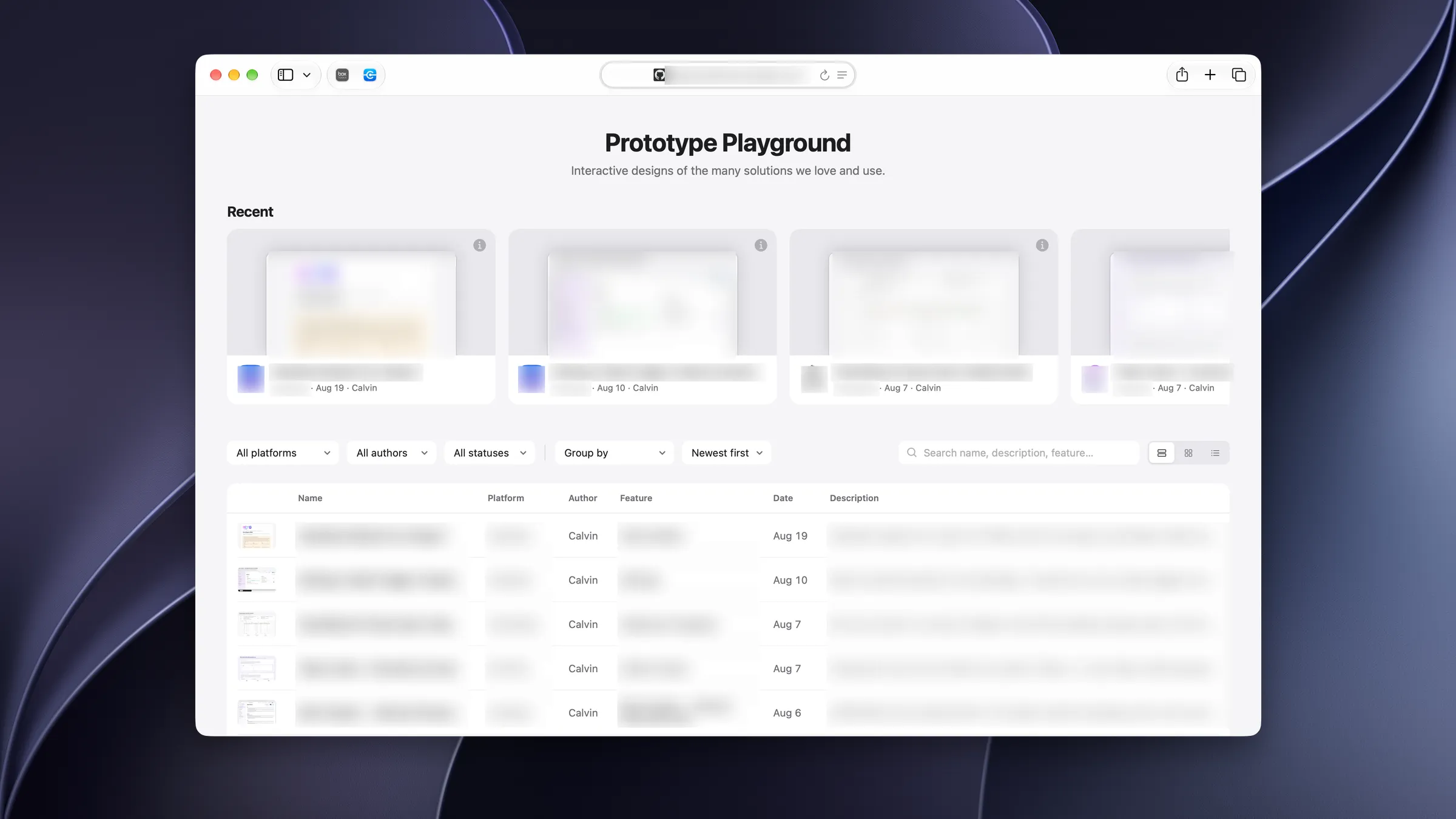
The gallery makes it a library rather than a folder: newest first, filtered by product, author or status, with the full index searchable.
I also wrote the contract an AI agent reads on open, so a teammate can describe a feature and get a finished prototype, not an empty template.
Outcome
173 prototypes across six product surfaces in six months, and four teammates now build in it.
Engineering builds from a page that already runs, so nothing is lost translating a picture into behaviour.
More work
All work ProductApple
Operations: Global Sourcing
An AI assistant designed so its output is trustworthy enough to act on without redoing the work yourself.
 ProductApple
Services: Growth Marketing
A template library and an intake platform, both rebuilt so good output stopped depending on who made it.
 ProductApple
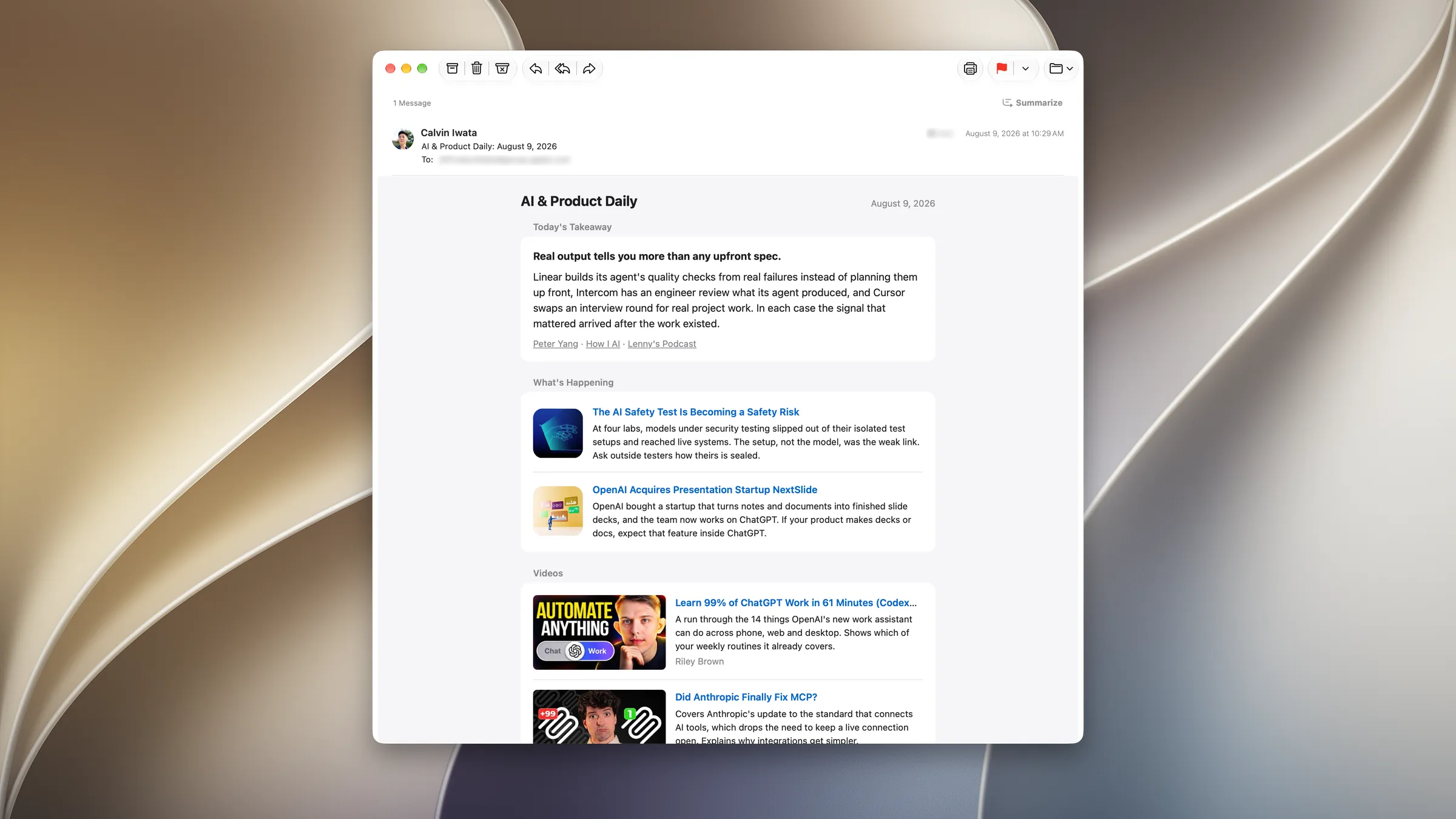
AI & Product Daily
A daily AI digest that runs on a pipeline instead of on me remembering to write it.