

Zeniversity
A meditation app for students who were not looking after their own mental health, me included.
The problem
I was working full-time and studying full-time, and it cost me. I went looking for how other students coped because I wasn’t coping well myself.
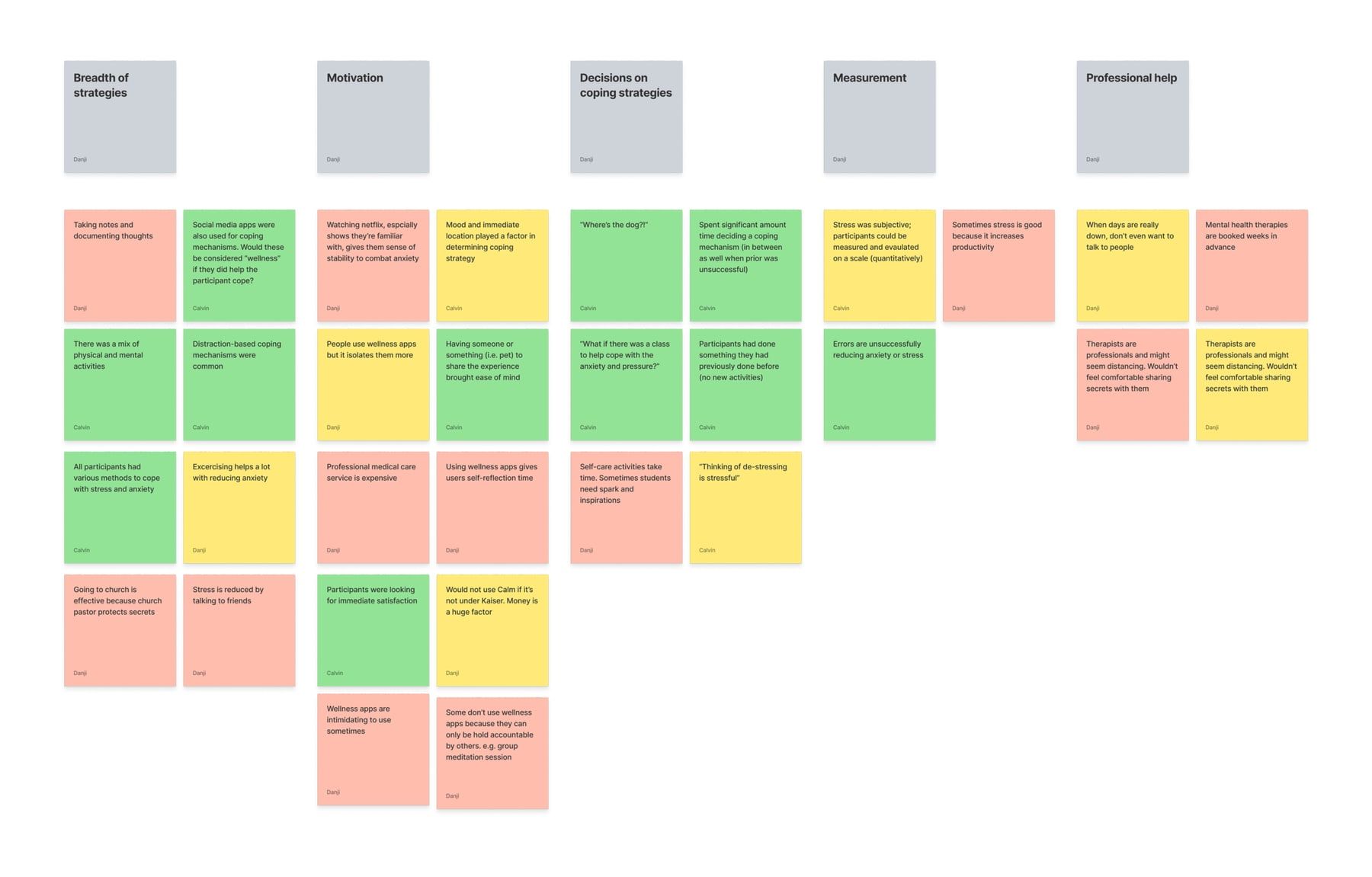
So the question was narrow: how do students actually cope with stress, and what would help? I ran interviews and diary studies, then built an affinity diagram.
The finding that shaped everything: students weren’t neglecting their mental health for lack of tools. They were already carrying enough, and anything that asked for more attention was going to lose.
What I did
Two decisions came out of that.
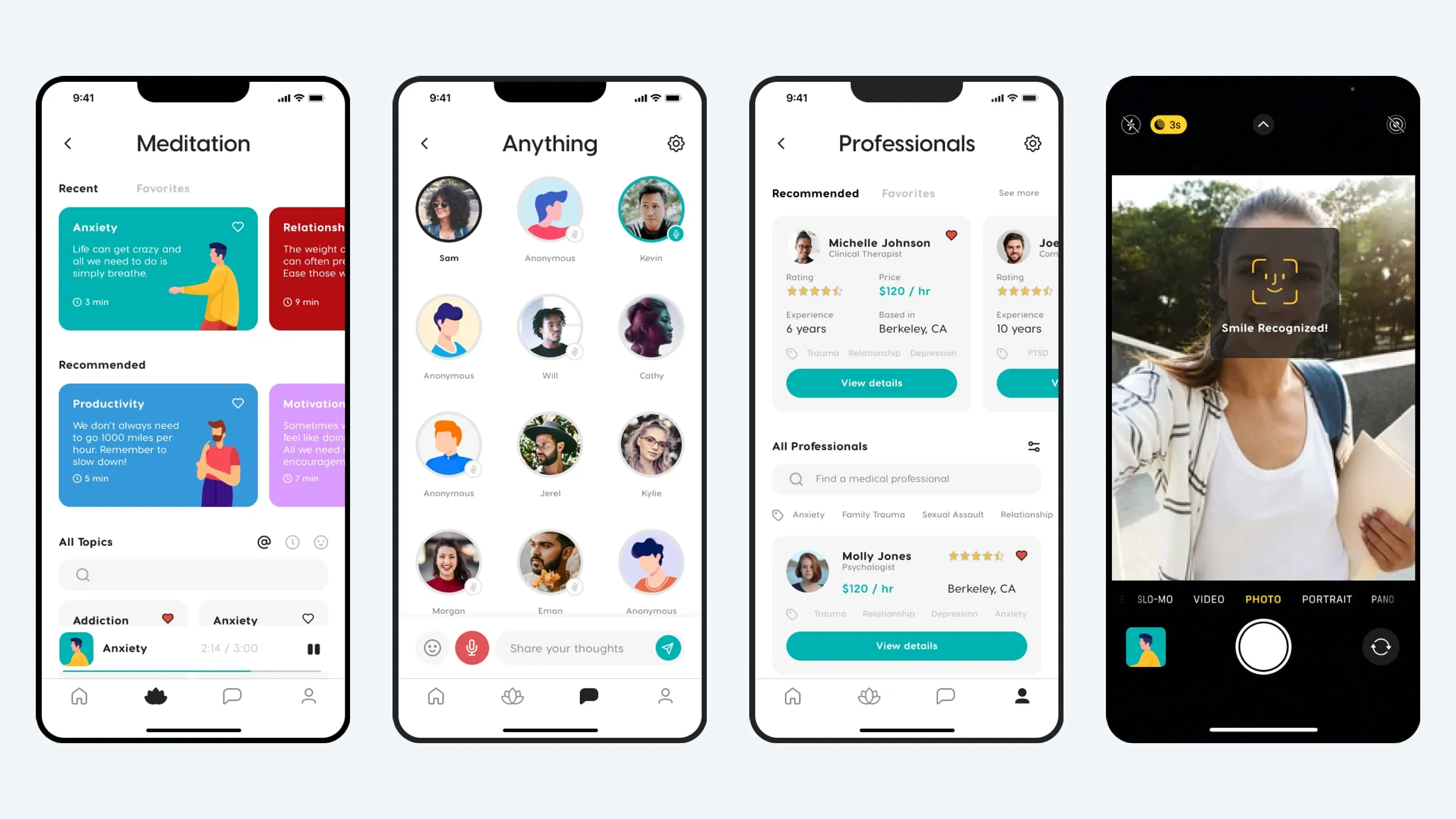
Four coping paths, not one. People cope differently, and the interviews said so plainly. Some wanted to be alone with it, some wanted company, some wanted a professional, some just wanted relief.
A single meditation feed would have served the first group and lost the rest.
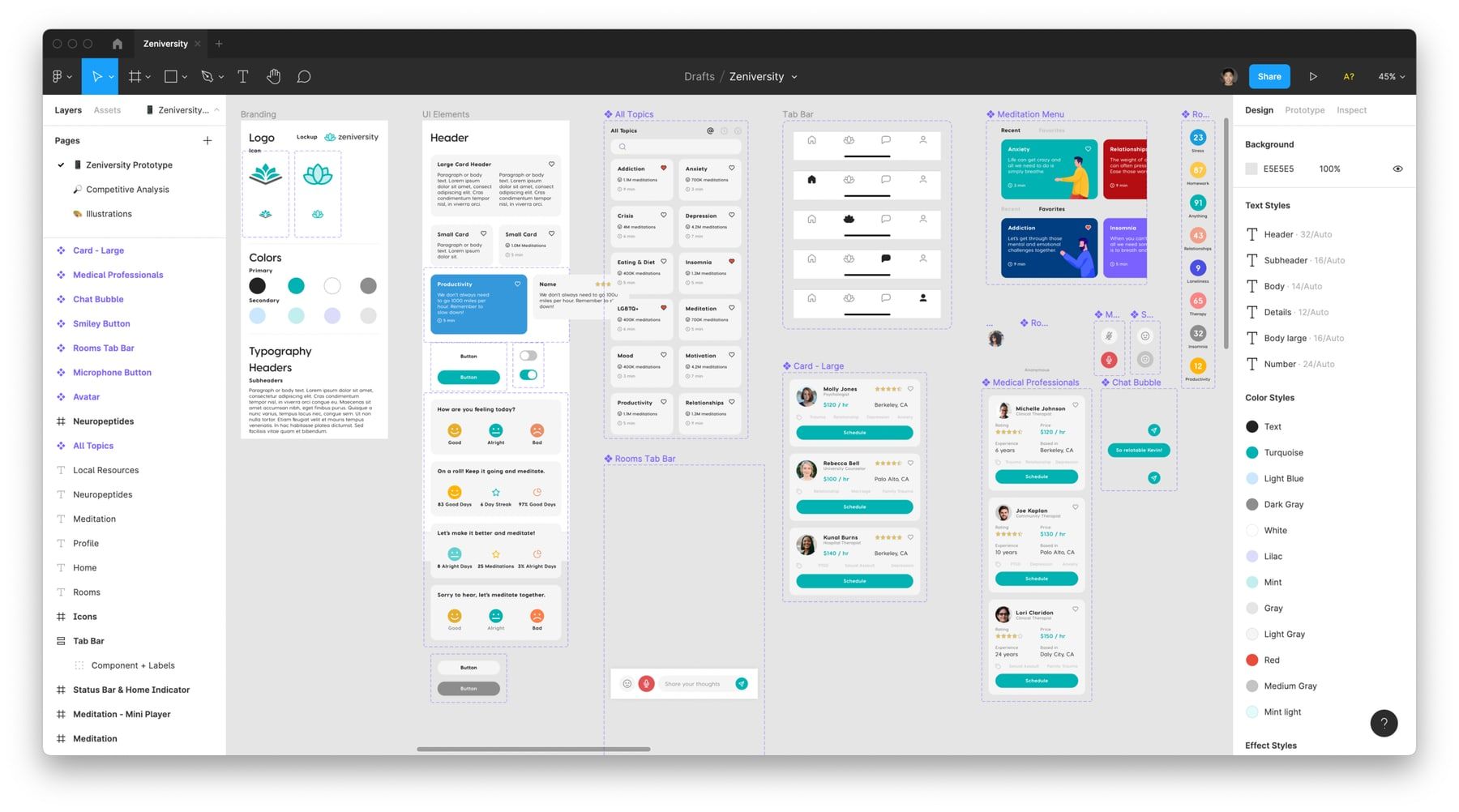
The interface had to be quiet. So it leans on white space, plain illustration and a card system. I built a component library so consistency was structural, not something I kept having to remember.
The four paths
Open the Figma prototype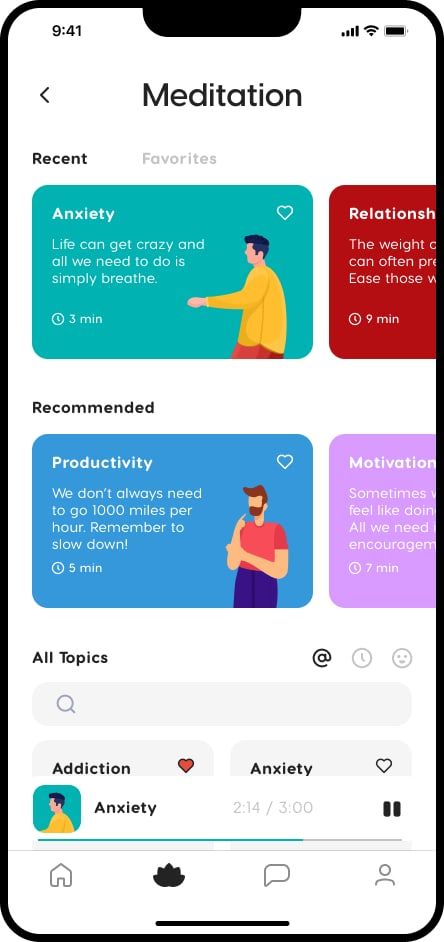
1. Alone, if that is easier. Self-guided tracks by what is actually wrong, anxiety or relationships or productivity, not by length. The player docks so browsing does not stop the audio.
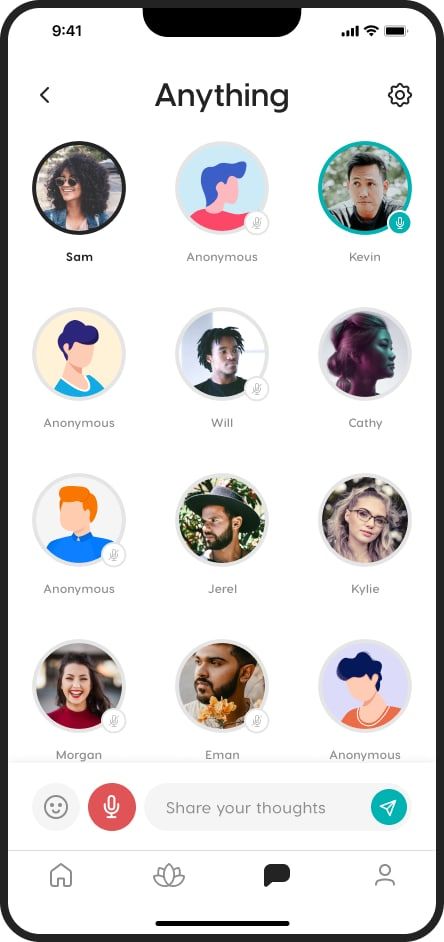
2. Or with other people. A room per topic, microphone optional, and Anonymous as a first-class choice. Wanting company without wanting to be identified came straight out of the interviews.
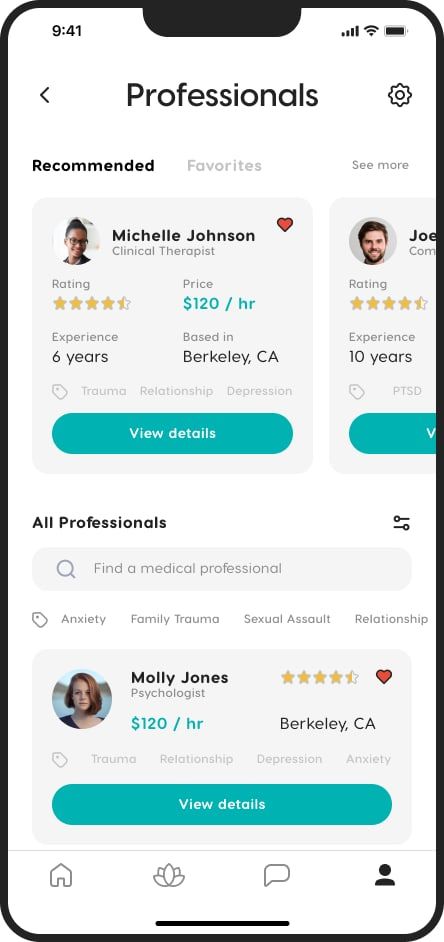
3. Or with a professional. Filterable by what you need help with, with price and location visible up front, because the cost of asking is the thing that stops people asking.
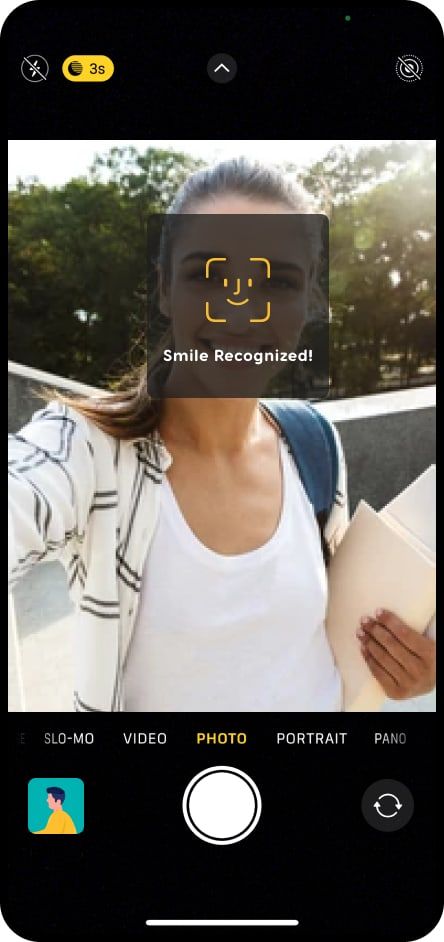
4. Or the dark-horse idea. Smile detection, and I called it a dark horse at the time for good reason. The premise, that a held smile lifts your mood, is contested rather than settled, so treat this as the speculative one of the four.
Outcome
A student in testing put it better than my writeup did. They’d been coping with school stress by snacking, and the app gave them something to do with other people instead.
That’s one participant, not a result. The project ended where coursework ends.
What carried forward was the framing. Two years later my MYND capstone came at the same problem from the opposite end. Zeniversity offered paths and waited to be opened. MYND watched for the moment you needed one.
The rest of the graduate work is in UC Berkeley.
More work
All work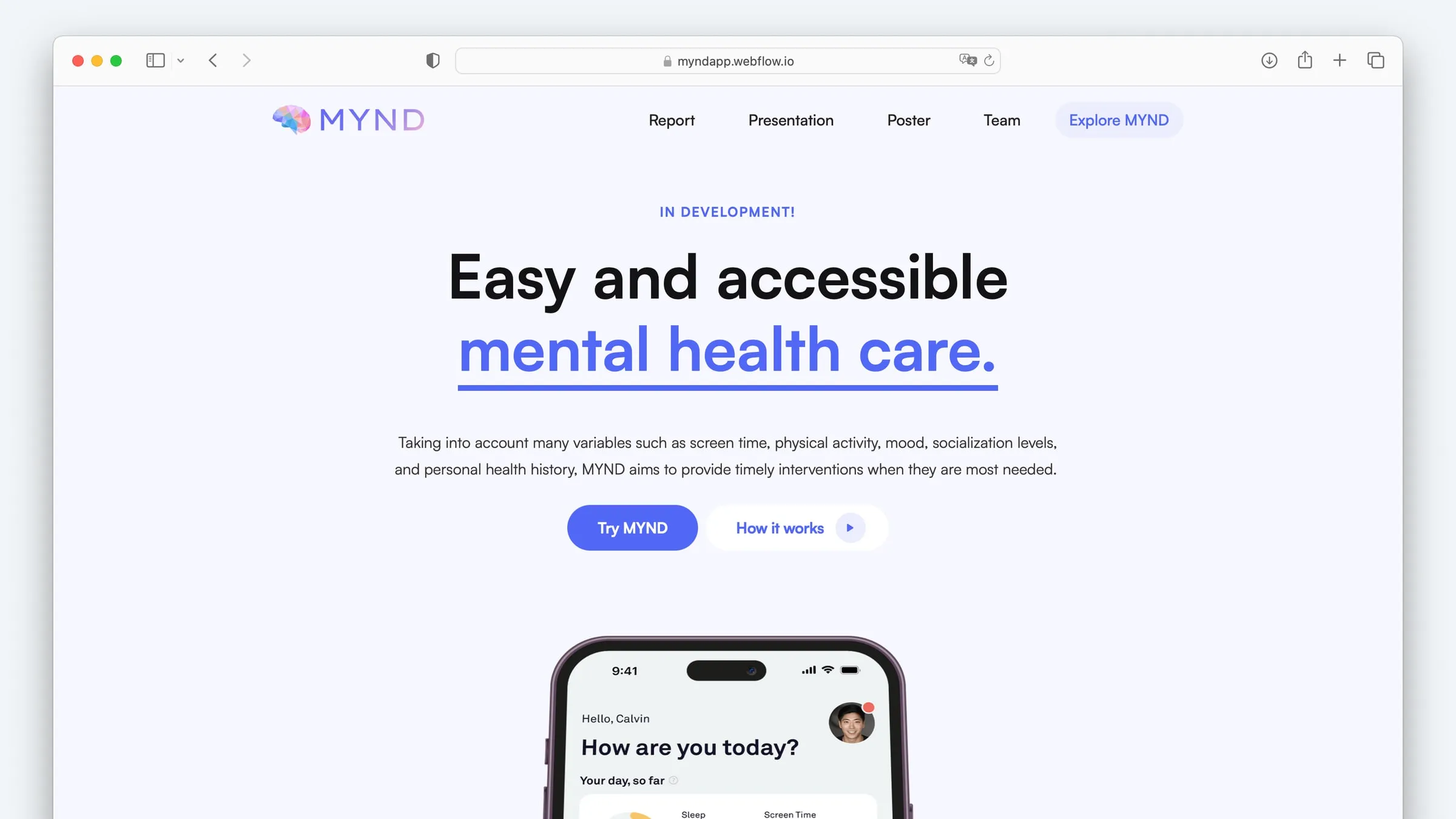 ProductGraduate capstone
MYND
A mental health app that reads behavioral signals and intervenes before a crisis, not after one.
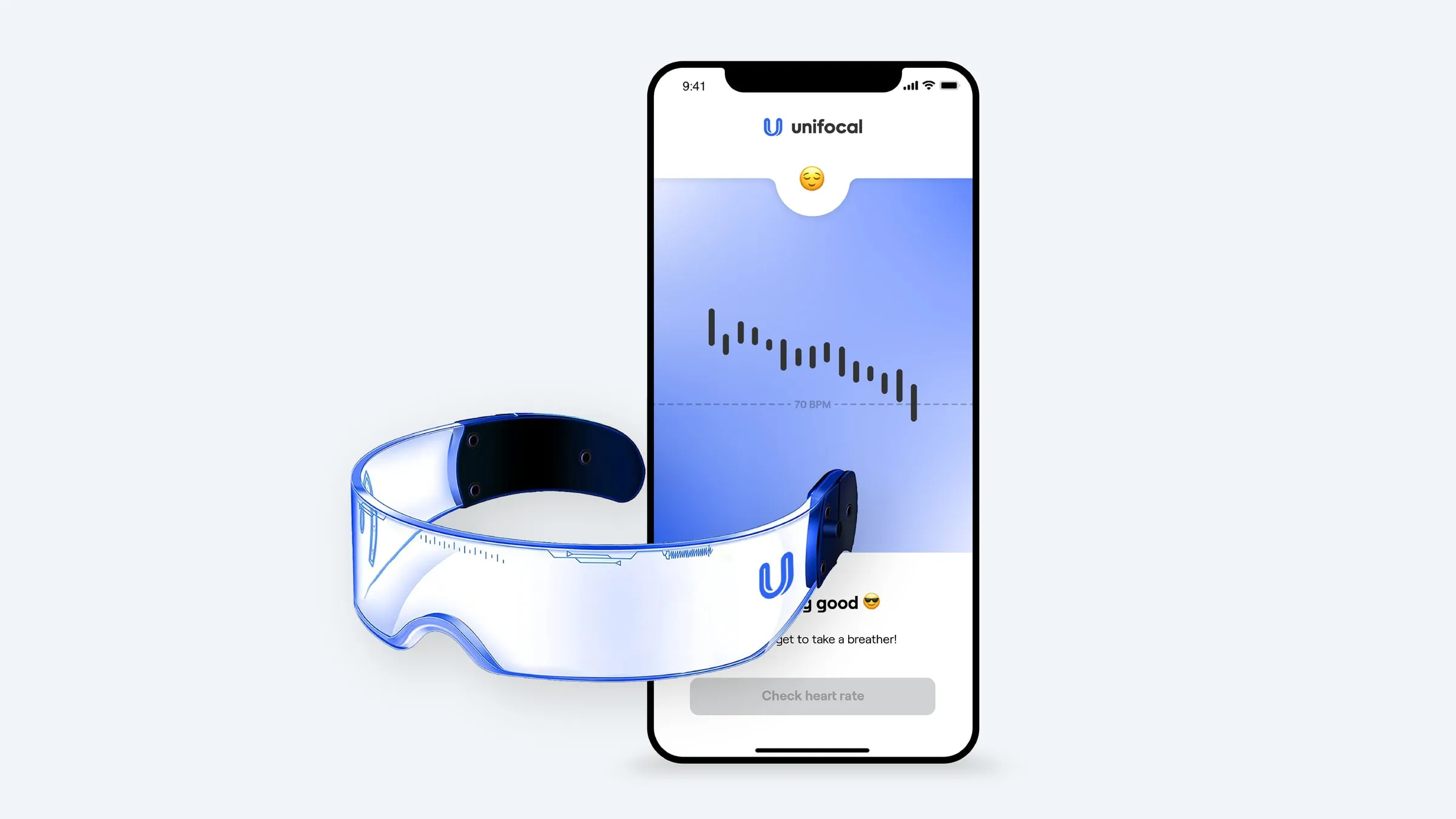 ProductGraduate school
UC Berkeley
Two years at Berkeley: a stress-sensing wearable, a type study, and an alphabet built out of a tangerine.
 ProductApple
Operations: Global Sourcing
An AI assistant designed so its output is trustworthy enough to act on without redoing the work yourself.